Every great gathering starts with a question, not a calendar slot
Gathering Architect gives Claude the instincts of an experienced facilitation coach. Install it and Claude stops generating generic agendas — it asks the two or three questions that change the shape of your event first.
An independent explainer for klarahermesz's Gathering Architect — built to take you from "never seen it" to "ready to implement".

01
You asked for an agenda. You got a template.
Why does this exist?
Ask a generic AI to design a workshop and you get time slots — maybe an icebreaker, probably three activities that work for any group, anywhere, for any reason.
It fills the calendar without ever asking why you're gathering. That's exactly why most events feel like wasted time.
Purpose is the decision that shapes everything else: who to invite, how to open, which methods match the energy you need, what a good outcome actually looks like. Skip it and you design logistics, not experiences.

02
A coaching-first gathering design skill for Claude
What does it actually do?
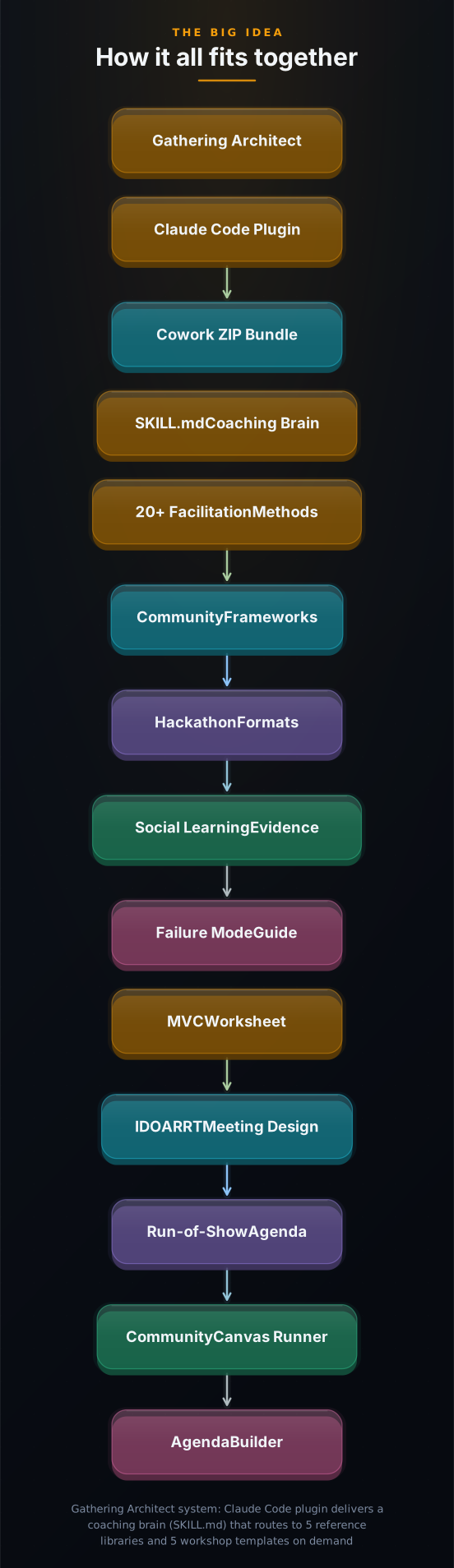
Gathering Architect is a Claude Code plugin that transforms Claude into a purpose-first facilitation coach. It bundles 20+ facilitation methods, five research-backed reference libraries, and five ready-to-use workshop templates.
The skill auto-triggers when you mention workshops, meetups, hackathons, community building, or engagement problems — or invoke it directly with /gathering-architect:gathering-architect.
Instead of immediately generating a schedule, it asks two or three sharp diagnostic questions. The agenda it writes after those answers is the one worth someone's Saturday.
| What's Included | What It Gives You |
|---|---|
| SKILL.md — The Brain | Coaching flow, voice rules, method logic, 4-phase conversation arc |
| 5 Reference Libraries | 20+ facilitation methods, community frameworks, hackathon formats, evidence, failure modes |
| 5 Workshop Templates | MVC worksheet, IDOARRT, run-of-show, Community Canvas runner, agenda builder |
| Cowork ZIP Bundle | One-click install for Claude desktop app — no terminal needed |
03
The move that separates good facilitators from great ones
Why is it elegant?
Every method, template, and framework in this skill is downstream of one insight.
Purpose is the only decision that cannot be undone. You can swap an activity mid-session. You cannot change why you gathered after the fact.
Gathering Architect operationalizes this as a hard coaching rule: no agenda before diagnosis, even under time pressure. When someone says they need a hackathon schedule by tonight, the skill promises the deliverable — and still asks the two questions whose answers change the whole shape of the day.
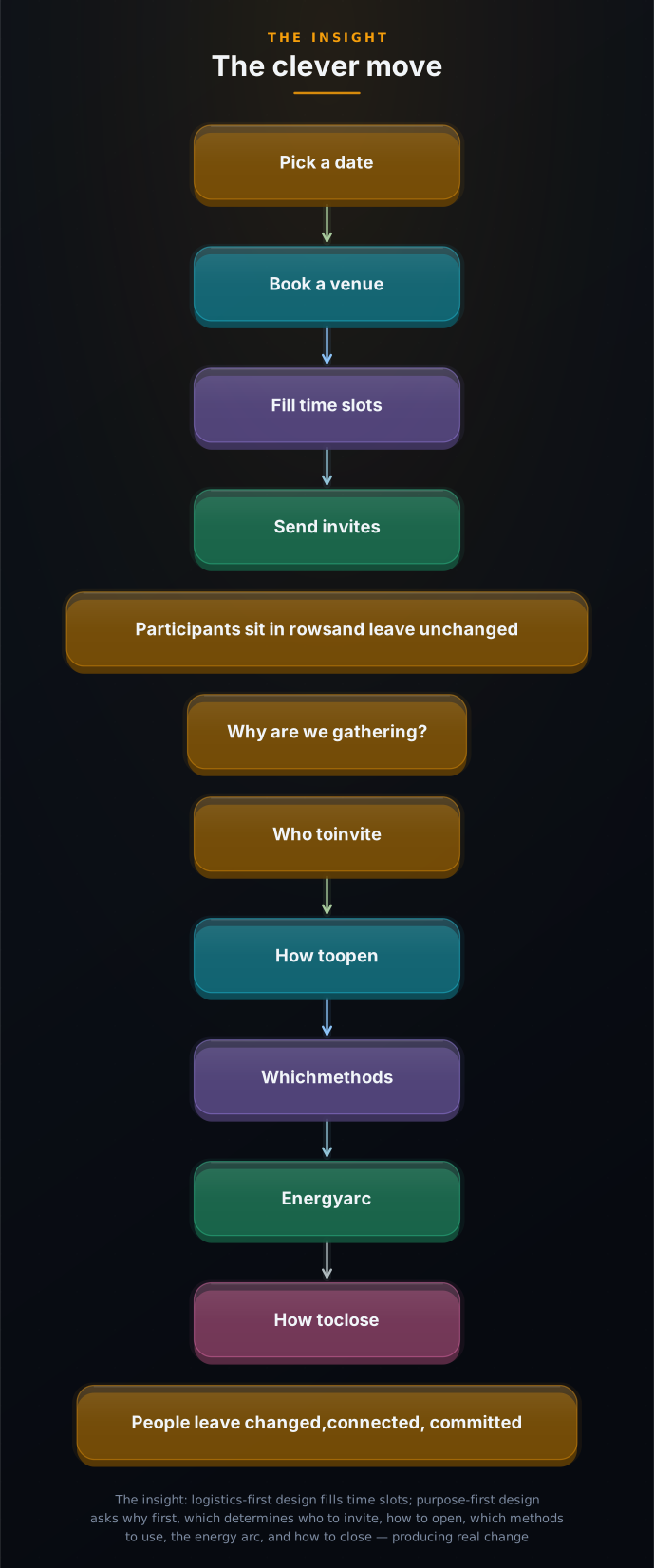
The schedule built after two good questions is the one worth someone's Saturday. A generic one they could have found themselves.
04
Four phases, one coaching arc
How is it built?
The skill follows a natural conversation across multiple turns — never dumping everything at once.
Phase 1 is a short diagnostic: 8-15 lines that acknowledge context, ask 2-3 sharp questions, offer one reframe to think about, then wait. Phase 2 delivers specific method recommendations grouped by impact — High, Medium, Low — so the organizer can prioritize.
Phase 3 builds a full agenda using the Kaospilot Learning Arch (SET: connection and safety; HOLD: challenge and productive tension; LAND: reflection and commitment). Phase 4 offers the right template for the user's situation.
All five reference libraries load on demand — the skill only reads what the conversation actually needs.
05
Built for people who run things that matter
Could I use this?
Whether you're designing a 3-hour meetup or a 3-day community sprint — Gathering Architect meets you where you are.

1 Workshop designer
Spending hours on an agenda only for participants to disengage by 10:30am? Gets a purpose-first diagnostic, three specific methods with energy arc, and introvert-safe design baked in.
2 Community builder
Attendance dropping and unsure if it's format, purpose, or time to end it? Gets an honest gut-check — quick wins, structural changes, or graceful ending — backed by Communities of Practice research.
3 Hackathon organizer
Needs a schedule by tonight for 40 strangers on Saturday? Two fast diagnostic questions, then a full run-of-show with SET/HOLD/LAND, energy notes, and a pre-event checklist.
4 Team lead
Running the same weekly meeting nobody finds useful but everyone attends? Gets IDOARRT meeting design (6 fields, 10 minutes) and an honest challenge on whether the meeting should exist at all.
06
From zero to your first coaching session in 60 seconds
How do I start?
Two paths: terminal (Claude Code) or point-and-click (Claude desktop app). Both lead to the same coaching experience.
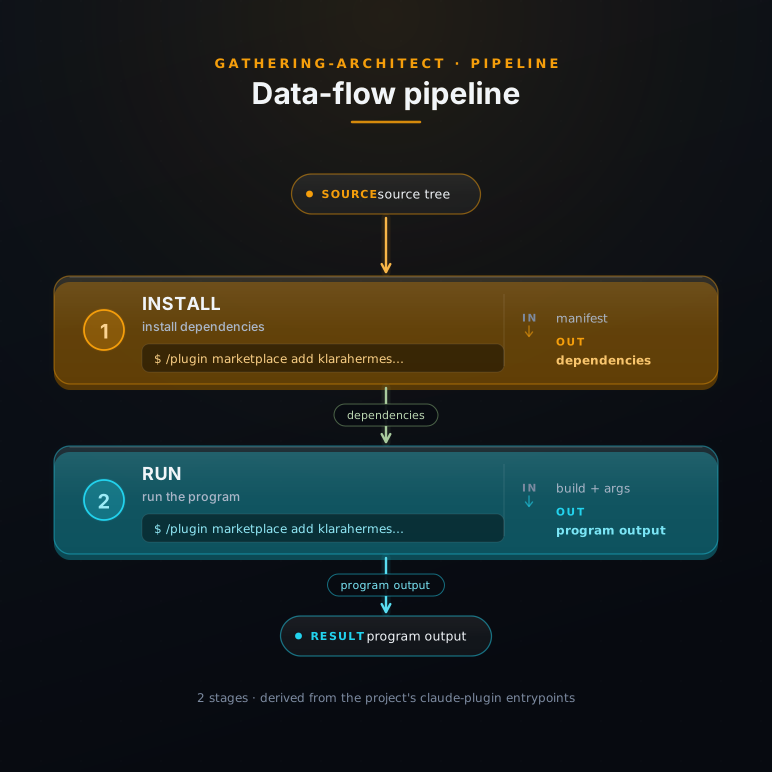
/plugin marketplace add klarahermesz/gathering-architect
/plugin install gathering-architect@gathering-architect- Prerequisites Claude Code (or Claude desktop Cowork). A paid Claude plan — Pro, Max, Team, or Enterprise.
- 1. Add the marketplace /plugin marketplace add klarahermesz/gathering-architect — registers the plugin source with Claude Code
- 2. Install the plugin /plugin install gathering-architect@gathering-architect — installs the skill in your session
- 3. Run it /gathering-architect:gathering-architect — or just describe your event (Claude auto-detects it)
- What you'll see Claude responds in 8-15 lines: it acknowledges your context, asks 2-3 diagnostic questions, and offers one reframe to think about. No agenda yet — that comes after your answers.
- After you answer You get method recommendations grouped by impact: High (do these first), Medium (if you have time), Low (nice to have). Ask for a full agenda and Claude writes one with timing, energy arc (SET / HOLD / LAND), and notes on what can go wrong.
- Desktop app (no terminal) Download gathering-architect-cowork-plugin.zip from the repo → open Cowork → Customize → Add plugin → Upload a file. Same coaching experience, no commands needed.
07
The full library, packaged for your AI too
Does my AI get it too?
The AI knowledge pack ships all five reference libraries and five templates in a vector-searchable format — so the facilitation science travels with you beyond Claude Code.